Recycling and Sustainability for Gardening Stoke Newington
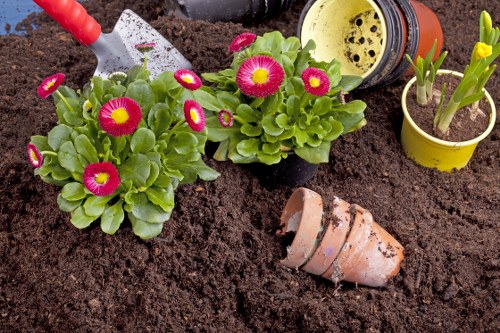 At Gardening Stoke Newington we prioritise Recycling and Sustainability across all green-space activities. Our vision is to create an eco-friendly waste disposal area and a thriving sustainable rubbish gardening area where soil, plants and materials circulate back into productive use. We blend practical waste separation with community-led reuse to reduce landfill and improve local soils. This page outlines our targets, local infrastructure, charity partnerships and low-carbon logistics that make gardening waste management both resilient and regenerative.
We promote the borough's approach to waste separation: clear segregation of food waste, green garden waste, and dry recyclables. In line with Hackney-style schemes, residents are encouraged to separate compostables from packaging to increase diversion rates. Our on-site sorting bays are designed to support household-level separation, and we provide visual signage to help volunteers and contractors follow the correct streams. Clear separation is key to turning what many call rubbish into resource.
 The practical side of our work involves collection, transfer and treatment. We coordinate with nearby transfer stations and processing sites to ensure garden waste becomes compost, mulch or reclaimed soil, not landfill. We send segregated loads to local facilities such as Hackney transfer points and neighbouring EcoPark-like centres that accept green waste and food organics. This ensures material is tracked, treated and returned as a low-impact soil amendment for the community.
Targets, Metrics and Local Transfer Stations
Our measurable goal is a recycling percentage target of 65% of all garden and household waste streams diverted from landfill by 2030. This target covers organic recycling (food and garden waste), recycling of plastics and glass from planting pots, and reuse of timber and metals. We monitor weight and volume at collection and at transfer points to publish regular progress summaries and refine routes and education campaigns to reach the target.
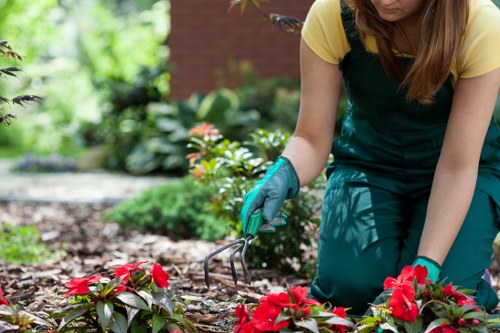 To make targets achievable we rely on efficient transfer stations and partner facilities. Loads from Gardening Stoke Newington go to nearby borough transfer hubs and composting facilities that specialise in green waste processing. These partnerships shorten haul distances and reduce emissions, while ensuring compost quality meets horticultural standards. Where possible we choose sites with anaerobic digestion for food waste or certified windrow composting for woody material.
Key recycling activities in our area include:
- Green waste collection — leaves, prunings and grass cuttings for composting.
- Food scrap diversion — kitchen and community café waste to anaerobic or aerobic treatment.
- Wood and timber reuse — chipped for paths or mulch, salvaged for raised beds.
- Container and pot recycling — cleaning and sorting plastic pots, glass and metal for municipal streams.
- Soil and compost exchange — reusing grown soil blends to avoid peat and external imports.
Partnerships, Low-Carbon Collection and Community Reuse
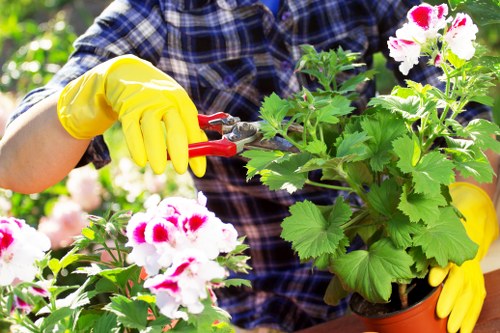 We work with a network of charities and social enterprises to increase reuse and extend the life of garden materials. Partners include organisations such as Groundwork London, Trees for Cities and local reuse groups that redistribute plants, compost and reclaimed timber to community plots and sheltered housing gardens. These partnerships create social value: training, volunteering and redistribution of materials that would otherwise become waste.
Collection logistics are a major part of our sustainability strategy. Gardening Stoke Newington is investing in a fleet of low-carbon vans — electric (EV) and plug-in hybrid vehicles — and cargo bikes for short urban hops. These vehicles reduce emissions on narrow streets and are sized for green waste sacks, crates of pots and small machinery. We prioritise consolidated pick-ups and route optimisation to lower fuel use and traffic impact, and we engage local contractors who meet our low-emission standards.
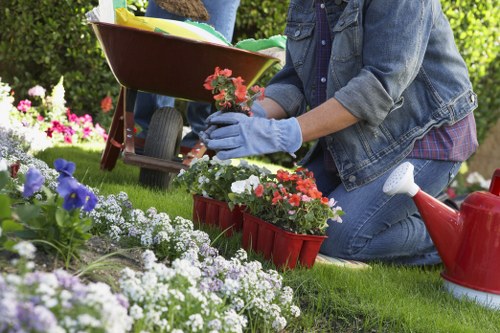 On-site practices complement transport and infrastructure. We run community composting bays, hot composting demonstrations to accelerate decomposition of woody material, and soil sieving stations to reclaim usable loam. Waste that cannot be composted is pre-sorted for recycling streams; broken plastics and metals are cleaned and sent to municipal recycling, and salvageable timber is stored for reuse. These actions create a genuine sustainable rubbish gardening area where minimal residual waste leaves the site.
Education and behaviour change underpin every element of our programme. Volunteers and community gardeners receive briefings on separation rules compatible with borough policies (food, garden, dry recycling) and training on how to prepare materials for transfer station acceptance. We avoid heavy technical language; instead we use clear labels, demonstrations and simple pledges that help the wider neighbourhood adopt more circular habits.
We also foster local circular economy loops: surplus topsoil and compost are offered to community projects; useful containers and tools are channeled to charity partners; and seasonal plant swaps reduce the need for new pots and packaging. These small exchanges multiply the environmental benefit of our site and keep materials in productive use.
By aligning a recycling & sustainability mindset with practical infrastructure — from borough-style waste separation through local transfer stations, charity partnerships and low-carbon vans — Gardening Stoke Newington is building an urban model for resilient, resource-smart horticulture. Join us in turning green waste into community resource and helping the neighbourhood meet its recycling goals while creating healthier soils and greener streets.